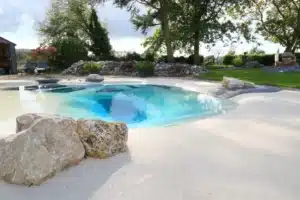
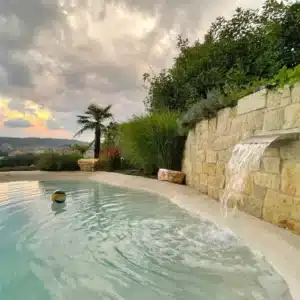
A beach-entry pool is often recognized first by its appearance: the water gradually meets the surrounding surface instead of beginning at a conventional vertical edge. But the difference is not only visual.
The entry changes how people move into the water, where they can pause and how the shallow area becomes part of everyday use.
A shoreline instead of a step
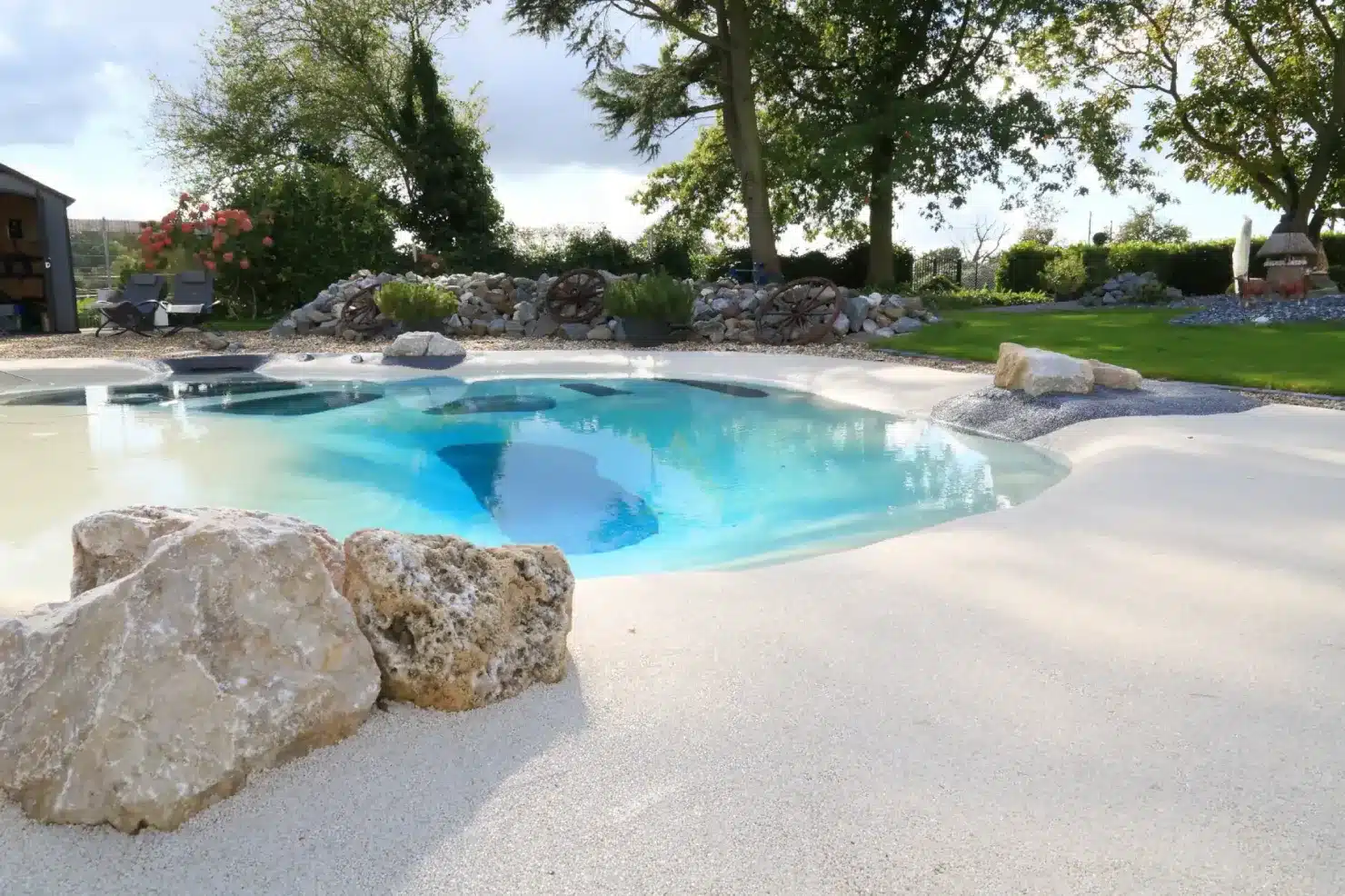
Traditional pools commonly use steps, ladders or a defined ledge to enter the water. A gradual beach-style entry creates a gentler transition from dry space into shallow water.
That shallow zone can become a place to sit, cool off or stay near the water without immediately moving into the deeper swimming area.
The deeper area does not disappear
A beach entry does not mean the entire pool has to stay shallow. Beach Pool designs can combine flatter water zones with deeper swimming areas. The depth profile can be shaped around how the client wants to use the pool rather than following one standard configuration.
It changes the relationship with the landscape
A hard pool edge creates a strong visual boundary. A shoreline-style entry can make that boundary feel softer, especially when the surrounding materials, stone and landscaping are planned with it.
For clients pursuing a natural or resort-inspired backyard, this can be one of the most important differences between the Beach Pool concept and a conventional pool layout.
The right choice depends on the experience
There is no universal pool style that works for every home. A formal geometric pool may be exactly right for one property, while another needs a softer shape and gradual entry to feel connected to the architecture and landscape.
The better question is not simply whether a beach entry looks attractive. It is whether that style supports the way you want the backyard to feel and function.