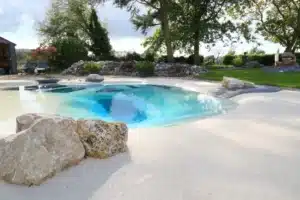
Many pool projects are really backyard projects. The vision may include landscaping, lighting, terraces, outdoor seating or other improvements that make the pool feel connected to the home.
If those pieces are part of the goal, it is worth understanding the complete scope before deciding how much to finance.
Separate the pool cost from the project cost
Start with two numbers. The first is the pool and its selected features. The second is the total amount required to create the finished outdoor environment.
That distinction helps prevent a common problem: completing the pool and discovering that the remaining budget is not enough to finish the space around it.
Understand how the financing works
Different financing products release funds and calculate payments differently. A home equity loan generally provides a lump sum, while a HELOC can allow borrowing over a draw period. The Consumer Financial Protection Bureau provides a useful explanation of those differences.

Leave room for decisions that happen during design
A preliminary concept may evolve once you see finish samples, lighting options, stone or landscape relationships. A financial plan that leaves no flexibility can force late compromises.
That does not mean borrowing more than you need. It means getting a realistic project scope before committing to a financing structure.
Design first, finance the real vision
The design process should clarify what belongs in the project and what can wait. Once that is clear, you can compare financing options against a real plan rather than an estimate built around the pool alone.
For a broader starting point, see our guide to budgeting for a luxury backyard pool.