The edge of a pool is one of the strongest lines in the backyard. It tells the eye exactly where the landscape stops and the water begins.
For a formal architectural pool, that crisp boundary may be perfect. But for a more natural outdoor environment, it can work against the look the homeowner is trying to create.
Hard edges create separation
Traditional coping and vertical pool walls make a clear division between dry space and water. That can make the pool read as a separate object even when the surrounding landscape is soft and organic.
A gradual entry changes the visual transition
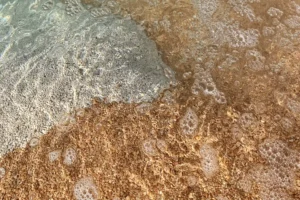
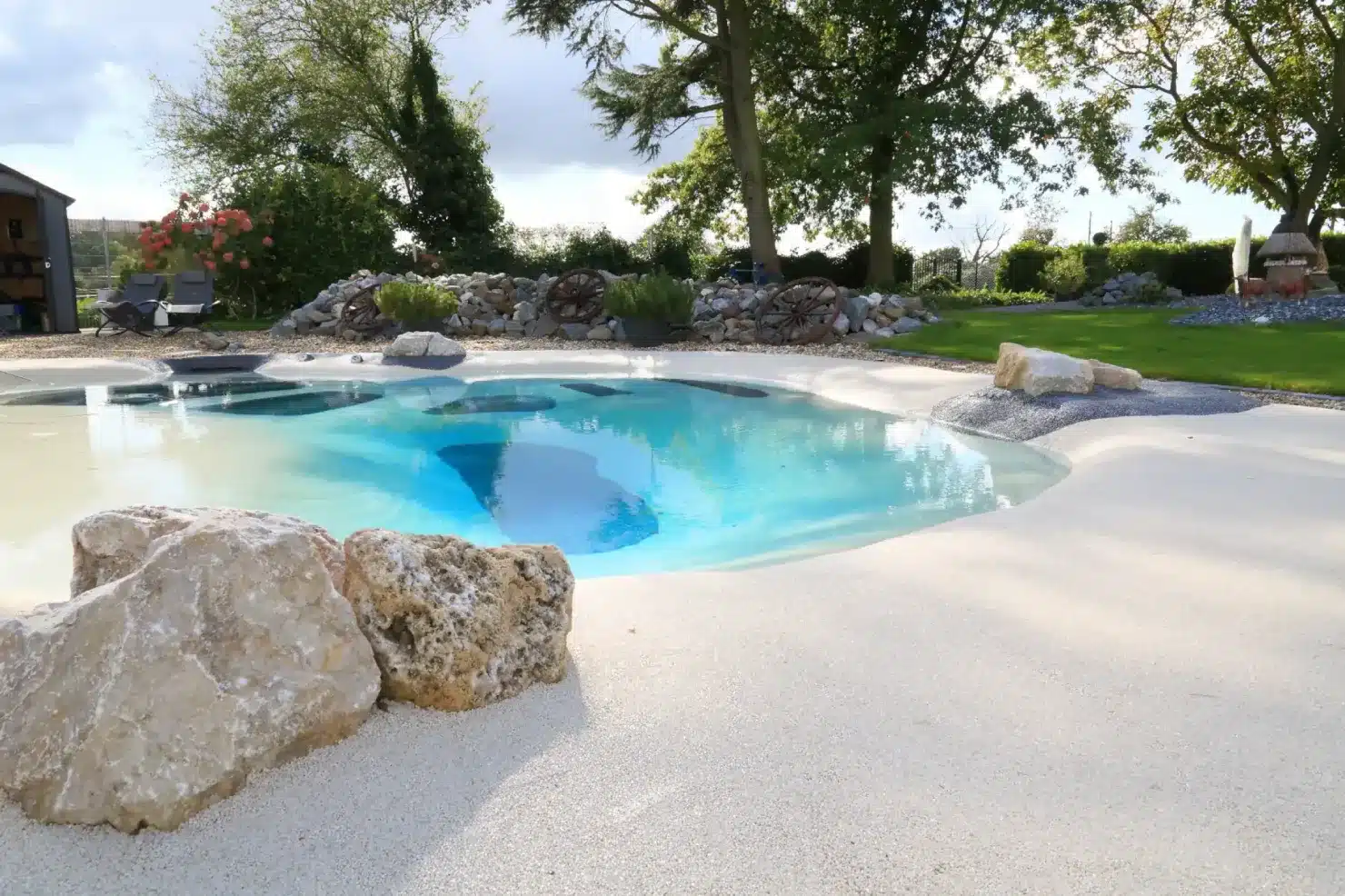
A beach-style entry creates a softer line. Water begins gradually across the shoreline, which can make the pool feel more integrated with stone, planting and the surrounding ground plane.
The benefit is also functional
A gradual entry is not only about appearance. The shallow area can become a place to lounge, cool off or remain near the water without immediately entering the deeper section.
The surrounding materials still matter
A shoreline does not automatically create a natural-looking backyard. The landscape, stone, terrace and planting should reinforce the same design language. Luxury comes from the relationship between those choices.
For a broader comparison, see what makes a beach-entry pool different from a traditional swimming pool.