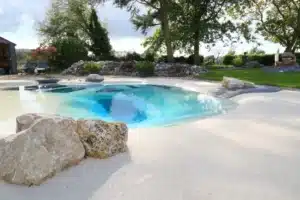
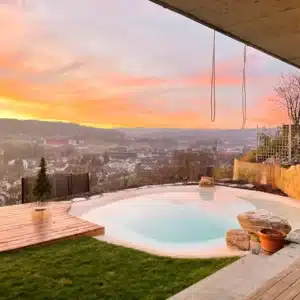
Standard pool shapes exist for a reason. They are familiar, easy to understand and often straightforward to price. The problem is not that they are standard. The problem is when the shape is selected before the property is truly considered.
The yard ends up adapting to the pool
Once a fixed footprint is chosen, furniture, landscaping, walkways and views have to work around it. On some properties that works beautifully. On others, it creates leftover spaces that are difficult to use.
Custom shape starts with the site
A custom pool can respond to the architecture, preserve an existing tree, open a view, protect a dining area or create a more natural transition through the backyard.
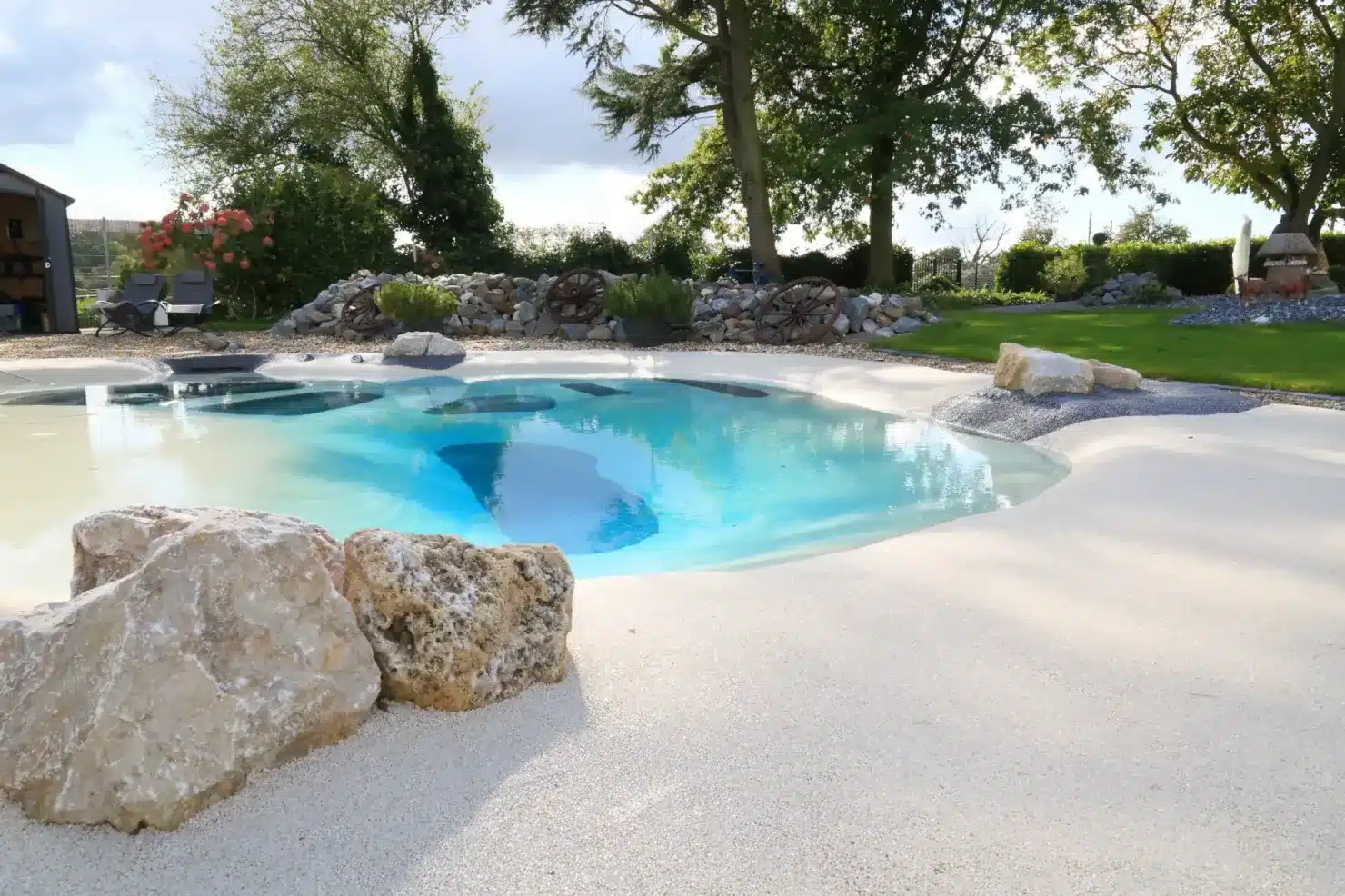
Depth can be custom too
The design conversation should not stop at the outline. Beach Pool can also be planned with flatter zones and deeper swimming areas, allowing the depth profile to support the way people actually use the water.
The best shape may still be simple
Custom does not mean complicated. A simple shape can still be the best solution if it responds to the site. The value is having the freedom to choose it because it belongs there—not because it was the only option on the page.
For more on that idea, see why custom pool design is changing outdoor living.